Ultimate Guide to Plastic Recycling Codes (1-7): What You Can Actually Recycle

Table of Contents
- The Confusion at Your Recycling Bin
- The Reality Check on Plastic Recycling
- Plastic Code #1: PET or PETE (Polyethylene Terephthalate)
- Plastic Code #2: HDPE (High-Density Polyethylene)
- Plastic Code #3: PVC (Polyvinyl Chloride)
- Plastic Code #4: LDPE (Low-Density Polyethylene)
- Plastic Code #5: PP (Polypropylene)
- Plastic Code #6: PS (Polystyrene/Styrofoam)
- Plastic Code #7: Other/Miscellaneous
- Beyond the Bin: Hard-to-Recycle Plastics
- How to Audit Your Plastic Usage
- Your Next Steps: From Confused to Confident
- Downloadable Resources
The Confusion at Your Recycling Bin
As a mom. I go through a lot of plastic products. Fruit pouches, yogurt tubs, soap dispensers– pretty much every consumable product seems to be packaged in plastic. And all this plastic can be really confusing to recycle. I often find myself staring at yet another empty tub or bag and wondering, “should I toss, reuse or recycle this? And if so, WHERE do I recycle it?” I spent years throwing plastic items into my recycling bin with a hopeful “maybe this works?” attitude. Turns out, I was doing more harm than good.
Here’s the truth: not all plastics are created equal, and those little numbered triangles actually mean something important. Understanding these codes is your secret weapon for proper disposal and genuinely reducing your environmental impact.
If you’re like me, you may also find yourself wondering what impact all this plastic use is having on your children’s health. It’s no secret that the chemicals in some plastics have been linked to everything from reproductive issues to cancer. So which plastics are the worst offenders? And what are some easy alternatives to plastic that might be safer for families?
In this guide, you’ll learn exactly what each plastic code means, which ones your local recycling program actually wants, and how services like Ridwell are changing the game for hard-to-recycle plastics. You’ll also find out the health considerations of each type of plastic, as well as some simple switches you can make to reduce your plastic consumption. Let’s turn that recycling confusion into recycling confidence!
The Reality Check on Plastic Recycling
Before we dive into the codes, let’s get real about plastic recycling in America. Despite our best intentions, only about 5-6% of the plastic we toss in recycling bins actually gets recycled. The rest ends up in landfills, incinerators, or worse – our oceans and environment.
Why such dismal numbers? Three big reasons:
- Contamination: Food residue, mixed materials, and non-recyclable items thrown in recycling bins can contaminate entire loads.
- Market limitations: Without buyers for recycled plastic, it often gets landfilled anyway.
- Confusion about what’s recyclable: That’s where those plastic codes come in!
Understanding these codes doesn’t just ease your eco-anxiety—it actually helps recycling facilities work better. When we only put truly recyclable items in our bins, contamination rates go down, and more material gets processed successfully.
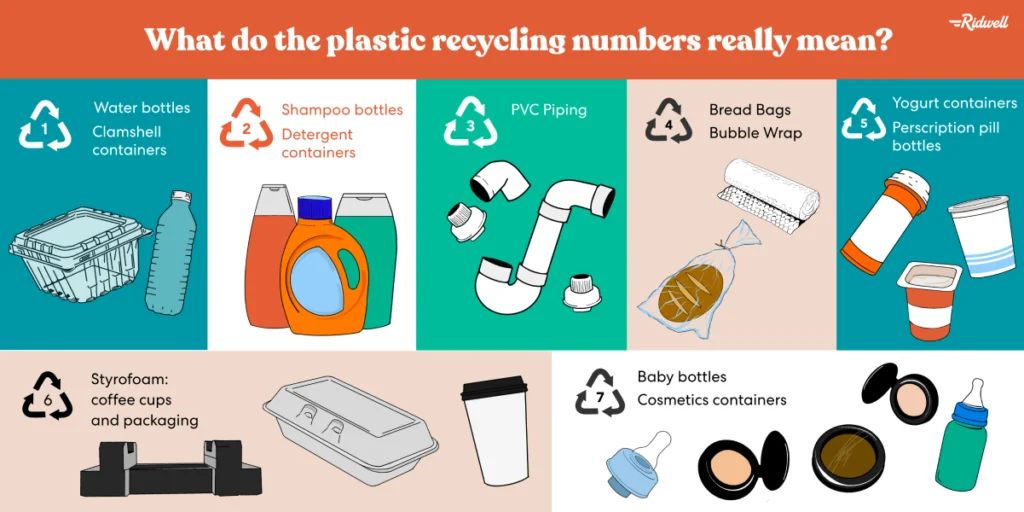
Plastic Code #1: PET or PETE (Polyethylene Terephthalate)
What it looks like:
Clear, strong, and lightweight plastic commonly used for beverages and food packaging.
Common items:
- Water and soda bottles
- Condiment bottles (ketchup, salad dressing)
- Peanut butter jars
- Mouthwash bottles
- Fruit containers
Recyclability: ★★★★★ (5/5)
PET is the most widely recycled plastic in the world! Nearly all curbside programs accept it, and it has a strong recycling market. This is one plastic you can feel confident about putting in your bin.
How to prepare for recycling:
- Empty completely and rinse
- Remove caps (check local guidelines, as some areas now accept attached caps)
- Leave labels on (they’re removed during processing)
- Crush if you want to save space (but not necessary)
Ridwell advantage:
While #1 plastics are readily accepted in curbside recycling, Ridwell ensures they actually get recycled by partnering with specialized facilities. Their transparent tracking shows exactly where your materials end up—something municipal recycling often lacks.
Health considerations:
PET is considered safe for single use, but isn’t designed for multiple uses. Repeated washing can cause the plastic to break down and potentially leach chemicals, especially when exposed to heat. Avoid reusing these containers for food storage.
Better alternatives:
- Glass containers
- Stainless steel reusable bottles
- Buying in bulk when possible
Plastic Code #2: HDPE (High-Density Polyethylene)
What it looks like:
Usually opaque or colored, slightly flexible but sturdy plastic.
Common items:
- Milk jugs
- Laundry detergent bottles
- Shampoo and conditioner bottles
- Household cleaner bottles
- Yogurt tubs (some)
- Butter tubs (some)
Recyclability: ★★★★★ (5/5)
Another recycling superstar! HDPE is widely accepted in curbside programs and has good market demand. It’s easily recycled into new containers, plastic lumber, and other products.
How to prepare for recycling:
- Empty and rinse
- Remove and throw away pumps and sprayers (they contain metal springs)
- Keep caps on (they’re typically the same #2 plastic)
- Flatten if you want to save space
Ridwell advantage:
Ridwell ensures proper sorting of caps and containers, which can sometimes get separated in traditional recycling. They also accept plastic pumps and sprayers in their “Plastic Film & Flexibles” category, which would otherwise go to landfill.
Health considerations:
HDPE is considered one of the safer plastics. It doesn’t contain BPA and has a good stability profile, though it’s still best to avoid heating foods in it.
Better alternatives:
- Refillable options at stores like Package Free Shop
- Solid shampoo bars, laundry sheets, and cleaning tablets
- Glass bottles with reusable pumps
Plastic Code #3: PVC (Polyvinyl Chloride)
What it looks like:
Rigid or flexible plastic, often used in construction but also in some consumer packaging.
Common items:
- Plastic wrap (some, but not all)
- Shower curtains
- Window frames
- Plumbing pipes
- Blister packaging
- Medical tubing
- Children’s toys (older ones)
Recyclability: ★ (1/5)
Bad news—PVC is rarely accepted in curbside recycling programs. It can contaminate other plastics during the recycling process and releases toxic chemicals when melted down.
How to dispose:
- Check with your local waste management authority for special disposal options
- For construction PVC, contact specialty recyclers
- For most consumer PVC items, unfortunately, they’ll need to go in the trash
Ridwell advantage:
Ridwell offers periodic specialty pickups for PVC pipes and other construction materials through their Featured Category rotations. This keeps these difficult materials out of landfills and properly processed.
Health considerations:
PVC is one of the most problematic plastics from a health perspective. It can leach phthalates (endocrine disruptors) and contains chlorine, which creates dioxins when manufactured or incinerated. Definitely a plastic to avoid when possible!
Better alternatives:
- Beeswax wraps instead of PVC plastic wrap
- Natural fiber shower curtains
- Silicone or glass food storage
- Wooden or fabric toys for children
Plastic Code #4: LDPE (Low-Density Polyethylene)
What it looks like:
Soft, flexible, sometimes crinkly plastic.
Common items:
- Grocery bags
- Bread bags
- Plastic wrap (most types)
- Squeezable bottles
- Dry cleaning bags
- Frozen food bags
- Six-pack rings
Recyclability: ★★ (2/5)
LDPE is generally not accepted in curbside recycling, but it’s gaining momentum for specialized recycling. The thin, flexible nature makes it difficult to process in standard recycling equipment.
How to dispose:
- Store drop-off programs at many grocery stores and retailers accept clean, dry film plastics
- Bundle plastic bags inside another plastic bag
- Make sure items are clean and free of food residue
- Never put in curbside recycling (they tangle sorting machinery)
Ridwell advantage:
This is where Ridwell truly shines! Their “Plastic Film & Flexibles” category accepts all your plastic bags, wrappers, and film. They partner with Trex, which transforms these materials into composite decking. A standard Ridwell membership includes unlimited plastic film recycling.
Health considerations:
LDPE is considered one of the safer plastics with lower risk of chemical leaching, but environmental concerns remain significant due to its persistence in the environment.
Better alternatives:
- Reusable cloth bags for groceries and produce
- Beeswax or silicone wraps for food storage
- Unwrapped bread from bakeries
- Reusable mesh bags for bulk items
Plastic Code #5: PP (Polypropylene)
What it looks like:
Rigid but somewhat flexible plastic, often opaque or semi-transparent.
Common items:
- Yogurt containers
- Butter and margarine tubs
- Medicine bottles
- Takeout containers
- Straws
- Disposable diapers
- Some food storage containers
Recyclability: ★★★ (3/5)
Recyclability varies widely by location. While acceptance is growing, it’s still inconsistent across different recycling programs. Always check your local guidelines.
How to prepare for recycling:
- Empty and rinse thoroughly
- Remove any paper labels if possible
- Keep lids attached if they’re also PP
- Check your local recycling guidelines to confirm acceptance
Ridwell advantage:
Even if your local program doesn’t accept PP, Ridwell does! They specifically partner with facilities that can process #5 plastics effectively. For medicine bottles, they offer a periodic “Medicine Bottles” category that ensures these are properly recycled while protecting privacy (labels are shredded).
Health considerations:
PP is considered one of the safer plastics, with good heat resistance and low leaching potential. It’s often used for hot foods and microwaveable containers for this reason.
Better alternatives:
- Glass food storage containers
- Stainless steel straws or paper alternatives
- Cloth diapers
- Buying yogurt in larger glass containers instead of single-serve plastic
Plastic Code #6: PS (Polystyrene/Styrofoam)
What it looks like:
Either rigid, clear plastic or foam (Styrofoam).
Common items:
- Foam takeout containers
- Disposable coffee cups
- Plastic cutlery
- CD cases
- Foam packaging and peanuts
- Clear plastic produce containers
- Solo cups
Recyclability: ★ (1/5)
One of the least recyclable plastics. Most curbside programs do not accept PS in either rigid or foam form. It’s lightweight, bulky, and expensive to transport and process.
How to dispose:
- Unfortunately, most PS needs to go in the trash
- Some specialized drop-off locations exist for foam PS
- Shipping stores sometimes accept clean foam peanuts for reuse
- Always check local options before trashing
Ridwell advantage:
Ridwell occasionally offers Styrofoam collection as a Featured Category. When available, members can fill a bag with clean, dry Styrofoam for proper recycling—keeping this problematic material out of landfills where it would otherwise remain for centuries.
Health considerations:
PS is problematic from a health perspective. It can leach styrene (a possible carcinogen) especially when heated or in contact with acidic foods. It’s increasingly being banned in many cities and states.
Better alternatives:
- Bring your own containers for takeout
- Use a reusable coffee cup
- Choose metal or bamboo cutlery
- Request no Styrofoam when ordering items online
- Support businesses using compostable containers
Plastic Code #7: Other/Miscellaneous
What it looks like:
Varies widely—this is a catch-all category.
Common items:
- Compostable plastics (PLA)
- Acrylic
- Nylon
- Polycarbonate (some water bottles)
- Mixed material plastics
- Medical devices
- Baby bottles (older ones)
Recyclability: ★ (1/5)
Generally not recyclable in curbside programs. As a mixed category, different #7 plastics require different recycling processes, making them difficult to sort and process.
How to dispose:
- Most #7 plastics must go in the trash
- For compostable plastics (PLA), these require industrial composting facilities
- Check with manufacturers for take-back or specialty recycling programs
- Always verify local guidelines, as acceptance varies
Ridwell advantage:
Ridwell offers specialized categories that can handle some #7 plastics, particularly through their “Hard-to-Recycle Plastics” featured category. Their partnerships with TerraCycle and specialized recyclers provide options for materials that would otherwise end up in landfills.
Health considerations:
As a catch-all category, health considerations vary widely. Some #7 plastics contain BPA or other concerning chemicals, while others (like PLA) are plant-based and have fewer health concerns but still contribute to plastic pollution.
Better alternatives:
- Glass, stainless steel, or ceramic containers
- Natural fiber materials
- Check for “BPA-free” labels at minimum
- Research specific products to understand their composition
Beyond the Bin: Hard-to-Recycle Plastics
So what about all those problematic plastics that don’t belong in your curbside bin? This is where specialized solutions like Ridwell become game-changers.
Plastic Film & Bags
Things like grocery bags, bread bags, bubble wrap, and plastic mailers may not work in curbside recycling, but they can have a second life through:
- Ridwell’s standard service: Their ongoing “Plastic Film & Flexibles” category accepts clean, dry plastic film that would otherwise go to a landfill.
- Store drop-off programs: Many grocery stores and retailers (Target, Walmart, etc.) have collection bins—look for them near the entrance.
- DIY options: Some crafters transform plastic bags into plarn (plastic yarn) for making durable items like tote bags or sleeping mats for homeless shelters.
Toothbrushes & Oral Care Products
Those plastic toothbrushes, floss containers, and toothpaste tubes add up to a lot of waste:
- Ridwell’s rotating categories: Periodically offers collection of oral care products through partnerships with TerraCycle.
- TerraCycle’s Mail-In Programs: Some brands sponsor free recycling programs for their packaging.
- Dentist office collection: Some dental practices participate in recycling programs.
Plastic Toys
When toys break or children outgrow them:
- Ridwell’s “Toys” category: Periodically offered to collect plastic toys for proper recycling or donation if in good condition.
- Second Chance Toys: Organization that accepts plastic toy donations.
- Local toy libraries: May accept donations for community use.
How to Audit Your Plastic Usage
Ready to take control of your plastic consumption? Let’s do a quick home audit:
Kitchen Audit
- Check your food storage containers—can you replace plastic with glass?
- Look at how your food is packaged—can you buy from bulk bins instead?
- Examine cleaning supplies—can you switch to concentrates or refillable options?
Bathroom Audit
- Count your plastic bottles—can you switch to bar products?
- Look at disposables like razors and toothbrushes—are there reusable alternatives?
- Examine your makeup and skincare packaging—do companies offer refills or take-back programs?
Shopping Habits Audit
- How many plastic bags do you collect weekly?
- What single-use items could you easily eliminate?
- Which brands offer plastic-free alternatives to your favorites?
Action Plan
For the plastics you can’t avoid:
- Ensure proper recycling based on the code
- Consider subscribing to Ridwell if it’s available in your area
- Find specialty recycling programs for the rest
Your Next Steps: From Confused to Confident
Understanding plastic recycling codes is just the beginning. Here’s what you can do starting today:
- Print out our recycling guide (see downloadable content below) and post it near your recycling bin
- Conduct a quick home audit using our worksheet to identify your biggest plastic sources
- Look into Ridwell if you’re in their service area (currently Seattle, Portland, Denver, Minneapolis/St. Paul, Austin, and expanding)
- Check your local recycling guidelines to confirm what’s accepted curbside
- Pick one plastic type to eliminate or reduce this month
Remember, perfection isn’t the goal—progress is. Every piece of plastic properly disposed of or avoided altogether is a win for our planet.
Downloadable Resources
- Refrigerator Guide to Local Recycling – A printable cheat sheet for quick reference
- Home Plastic Audit Worksheet – Room-by-room guide to find plastic reduction opportunities
How do you handle plastic recycling in your home? Have you found creative solutions for hard-to-recycle items? Share your tips in the comments below!